
Back Pain
A compendium

After ‘Irregardless’, I think my second least favourite word is ‘journey’.
Journey used to mean something exciting - the physical movement between two points, but that completely changed, and all it conjures now is something hellishly laboured and inward-looking but I must admit that it’s a very useful word, mostly because it implies a certain sense of the unfinished.
All this is to say that I’m going to tell you about back pain and me, and that I’m sorry but it really is a ‘journey’ and an unfinished one at that.
Chronic pain is something that sits there while you go about your daily life, a bit like a tax return un-done, or someone else’s small child (not your own) with sticky hands, or a sock that has fallen underneath your heel as you walk, except that unlike all these things, chronic pain can’t be easily fixed. So if you are lucky enough not to suffer with it and want to understand it, then just think about something deeply unpleasant to you, that’s there all the time, that you have to accept will possibly be there until you die, and that you must learn to live with. Forever.
I’m not going to go into the details of my back pain, or my new friend, sciatica, because that’s boring. But I DO know that I’m not the only one dealing with this, and I am not interested in anyone coming anywhere near me with knives or needles (yet). So here is a list of things I do to manage it, in the hope that it may help someone, or at least that we can build upon it and give one-another suggestions. Obvs disclaimer: I’m not a doctor but I DO live permanently in my own body (lol) so I know what’s worked for me.
Gratitude/prayer
Don’t skip over this because this is my number one most effective pain-reliever to date. Your gratitude, if it is real, will take you further out of pain than any other thing on this list. SWEAR. I literally cannot bear how ridiculous and frankly smug this sounds, but there is no other way to express it. If you can find a way to be thankful for all the many good things in your life, your brain will start to focus on all of those things. If you need to write these things down in order to focus on them, then do that. If you believe in God, then talk to Him. If that’s not how your roll, and you find it difficult to focus on gratitude alone, then an equally good way is to point out beautiful things to people as you go about your day. “What an absolutely beautiful day” you might say to the person who is making your coffee so that they really believe you, and they smile…or you might just tell someone how much you appreciate them (they might not know!) The point is to refocus on joy, and see below…
An understanding of the psychology of pain.
The pain is real. It’s in your body, but your perception of it is happening in your amazing brain. Think about this for a moment, and understand that when you ruminate or dwell on something you effectively PRACTICE it…just like when you are practicing your guitar, or your French verbs. The more you focus on something, the more connections your brilliant brain will make for it and therefore the better you get at it. Same with pain; the more space you give it, the more space it will take up…obviously. With guitar or French, that’s a virtuous circle. With pain, it’s a doom loop. Doing a deep-dive into the psychology of pain was a game changer for me. There are so many things to learn, and knowledge is power. Watch this short video for a good (if rather dry) overview but the key takeaways that helped me are as follows:
Your pain isn’t necessarily a warning sign of damage…in fact, it usually isn’t (and meta-analyses back this up).
Catastrophising is a predictor of poor outcome. (Poor outcome being increased pain perception). (Read that again. And again, that fact is known, according to meta-analyses).
You’re not the only one! Lots and lots of people are in the same position.
Words matter. You can grimace and say to yourself “This pain is awful and I can’t bear it”, or you can say to yourself “I’ve dealt with this before, and I have many strategies in place to deal with it today”.
Pain doesn’t dictate your day. You do that. Pace yourself to do things that aren’t too much, every day, rather than waiting for a ‘pain free’ moment to present itself. Do your day, slowly, and breathe.
Sound bath
Another slightly woo thing, but only when you don’t get how powerful it is. The best way to think about this is to imagine all the liquid in your body…(we are made up of so much water), and imagine how that water reacts when it comes into contact with certain frequencies. You get vibrations, of course.
I don’t know if there’s any research that supports sound therapy as a pain reliever, but I don’t need to know, because my experience tells me that it helps, and I wish I’d discovered it sooner. I was introduced to this by a dear friend who holds regular ‘gong baths’ in her home. I went in extremely skeptical, and in a lot of pain. I left, still skeptical and still in pain. Twenty four hours later, the pain had suddenly reduced by around 80%. Astonishing. Something to think about.
Breathwork/relaxation
Non-sleep-deep-rest (NSDR) This is a meditation that can help with insomnia, stress, anxiety and pain. I use this regularly and highly recommend it. It has its roots, I think, in yoga. Extremely helpful and proven to slow the heartbeat, which induces relaxation. Particularly useful if you wake in the night and your mind starts racing.
Keep moving.
My immediate reaction to developing back pain was to employ an abundance of caution and basically stop moving. A gigantic mistake that ultimately made things worse for me. In the end I had to accept that waiting for the pain to go away wasn’t a viable option and that I needed to look for ways to move that were safe (there are many). First, listen to this podcast:
This Hubermanlab Podcast, on strengthening the back, was super-helpful and introduced me to:
The McGill Big Three (a set of 3 exercises to strengthen your core without hurting your back).
And here it is again with Huberman explaining the moves,
and with an extra move he discovered and talks about in the above podcast, which was effective for tackling his bulging disk.
No More Back Pain EVER video. Read the comments under this video. It has over 12 million views and is a set of exercises developed for cyclists by Dr Eric Goodman. It’s a very good way of strengthening certain areas that never get a look in. It’s hard work if you’re doing it properly but you’re done in around 12 minutes.
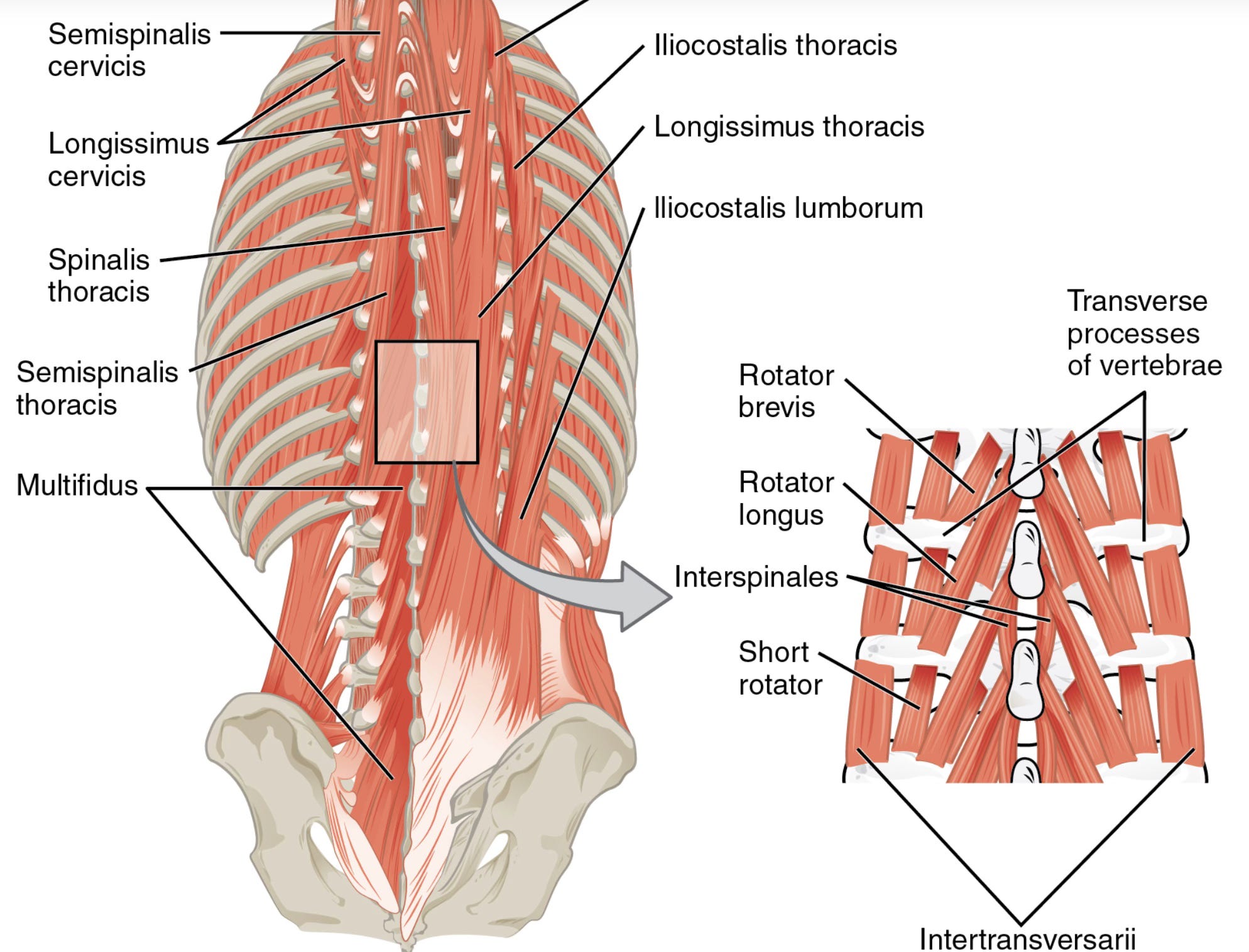
Low Backability. A clever protocol that involves lots of iso-holds to target all the tiny muscles surrounding the spine (see first pic), but for which you really do need access to a gym. He operates a pay-what-you-can model and is helping many many people if his instagram and testimonials are anything to go by. If I could get to the gym every day I would absolutely be doing this routine daily.
Sauna. This is another one for which I have zero evidence except my own anecdotal observations. I have found it to reduce my pain but that is perhaps because it’s a wonderful distraction as I get to eavesdrop. BTW Rotter if you are reading this I think we should DEFINITELY get a sauna
Walking. Walking is a brilliant cure-all. It seems to solve most problems (for me anyway). If you can walk with a friend then so much the better.
Safe bodyweight exercises. Push ups, planks, lunges or whatever exercises feel safe to you. I cannot stress enough how important it is to stay strong and keep your muscle mass up. Push ups (beautiful ones done properly) are very good. If you can’t do a push up, then start on your knees or against a wall and progress to do one perfect one. You have no idea what a gigantic achievement it was for me when I managed my first proper, good, beautiful push-up at age 50. I can now do ELEVEN. Perhaps one day I will do this:
Ok enough.
I’m going to keep this up as a rolling list, and I will also add sources for those meta-analyses I mentioned (I ran out of time). If anyone has other suggestions please do put them here and, well, perhaps we can all help one-another!
As always please do share this if you think it might be useful to anybody? It’s not really a subject that we ‘like’ is it, but please hit the heart anyway, so that we can get these suggestions to anyone who might find them helpful
x Laetitia
Very much relate to this and sorry you are dealing with sciatica. Ongoing pain is very tiring and tedious- yet one more thing that is always there, the gremlin in the back of the head.
I have fibromyalgia and also for many years had a lot of fairly constant gynae pain too. I am used to managing pain on a daily basis and the fatigue that often comes with it because of insomnia. I find that most of the time if it is the dull, lingering sort, distraction - getting to a point where you can ignore it, generally through immersion in work, works. Sharper erratic pain harder to deal with but it is a bad day indeed if I can’t walk it out. Walking has pretty much been my salvation. So has going to a kind of rehab gym which takes a very holistic approach - everything about your movement and posture is analysed and corrected and then your strength and balance is built up with very focussed exercises. I can’t imagine life without some resistance training now, it has been transformative.
The other thing I do a lot is breathe into the pain and that does bizarrely work.
I don’t have chronic back pain but I fell over onto the pavement yesterday and ache all over, including a pulled lower back. I’m going to try some of these ideas; I used to write a gratitude journal every night, 5 things, all the time thinking how stupid it was, but it really wasn’t.